Independence in an Age of Consensus
August 2026
Success has a way of attracting a crowd. In markets, capital flows to what has worked. In business, competitors study each other and replicate successful strategies. In professional services, firms watch one another closely and frequently move in similar directions. That does not make the crowd wrong. Good ideas deserve attention.
The challenge is that when enough people move in the same direction, consensus can begin to feel like certainty. The more certain the consensus feels, the more crowded the momentum becomes until it breaks. Eventually, a crowded trade, idea, or strategy stops yielding the same outsized gains. That is when independent judgment matters most.
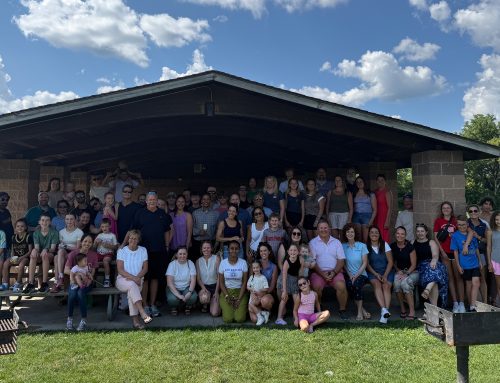
This idea is especially meaningful to us at Cornerstone as we celebrate ten years as an ESOP. For a decade, our path has been rooted in employee ownership, organic growth, and independence. It is not the easiest path, nor is it the most common. Yet it has allowed us to maintain our decision-making authority in service of our clients and the firm we are building. Ownership structure matters because it shapes who makes decisions, why those decisions are made, and whose interests come first. Our independence is not accidental. We chose employee ownership because we believe accountability, long-term thinking, and client commitment belong together.
The forces that create consensus in markets are also evident across our industry. Investment advisory firms are consolidating at a staggering rate, with firms joining larger organizations in pursuit of scale, technology, succession solutions, and access to capital. Those decisions are often rational, and they may be the right decisions for the firms making them. My point is not that consolidation is bad. Rather, it is that ownership structure influences perspective. It influences how organizations evaluate opportunities, define success, and balance short-term pressures against long-term objectives.
The same dynamic appears in investing. Popular investment themes usually become popular for a reason. Strong companies, sectors, and strategies attract capital because they have earned attention. Yet popularity can also affect how risk is perceived. When everyone seems to agree, it becomes harder to distinguish confidence from the comfort of broad agreement.
The distinction matters because, again, consensus is not the same as certainty. Consensus simply means many people have reached the same conclusion, while certainty suggests the conclusion is beyond question. Markets, industries, and businesses have a long track record of reminding us that those two are not interchangeable. History is filled with ideas that once seemed self-evident until conditions changed. That does not mean the crowd was foolish. In many cases, the crowd was acting rationally based on the information available at the time. What changed was the environment.
That reality underscores the importance of independent thinking. Independent judgment does not ensure better outcomes, and it does not make anyone smarter than the crowd. What it does preserve is the ability to pause and ask an honest question: Are we making this decision because it is right for our clients, our employees, and our long-term future, or because the current is pulling us in that direction?
There is comfort in moving with the current. It is reassuring to know others see the world the same way. Standing apart from the crowd rarely offers that same immediate validation. It can look inefficient, and at times, it may even look wrong before ultimately proving valuable.
For investors, the lesson is not to avoid the crowd simply because it is crowded. The better lesson is to remain wary when concentration becomes widespread. Markets will continue to experience periods when capital gathers around a relatively small set of winners, just as industries will continue to consolidate. Both are natural. Neither eliminates the need for judgment.
For Cornerstone, the lesson is similar. Employee ownership has helped preserve our ability to think and act independently. It has enabled us to maintain a focus on long-term relationships and long-term value creation while building the firm around the people who work here, the clients who place their trust in us, and the future we are creating together.
As industries become more concentrated, independent perspectives become increasingly valuable. That is true in markets, in business, and in life. As we reflect on our first decade as an ESOP, we are grateful for the trust our clients have placed in us and proud of what our employee-owners have built together.
Independence does not ensure success, but it preserves the freedom to decide what success looks like. In an environment where consensus carries increasing weight, that freedom may be one of the most valuable assets of all.
Commentary regarding the returns for investment indices and categories do not reflect the performance of Cornerstone Advisors Asset Management, LLC / Cornerstone Institutional Investors, LLC, or its clients. Historical performance results for investment indices and/or categories generally do not reflect the deduction of transaction and/or custodial charges or the deduction of an investment-management fee, the incurrence of which would have the effect of decreasing historical performance results. Figures contained herein are obtained from sources deemed reliable, but we do not guarantee its accuracy or completeness. Past performance is no guarantee of future results. Investments fluctuate in value.
Securities offered through M Holdings Securities, Inc., a Registered Broker/Dealer, Member FINRA/SIPC. Investment Advisory Services are offered through Cornerstone Advisors Asset Management, LLC. Cornerstone Advisors Asset Management, LLC and Cornerstone Institutional Investors, LLC are independently owned and operated. 5811289